
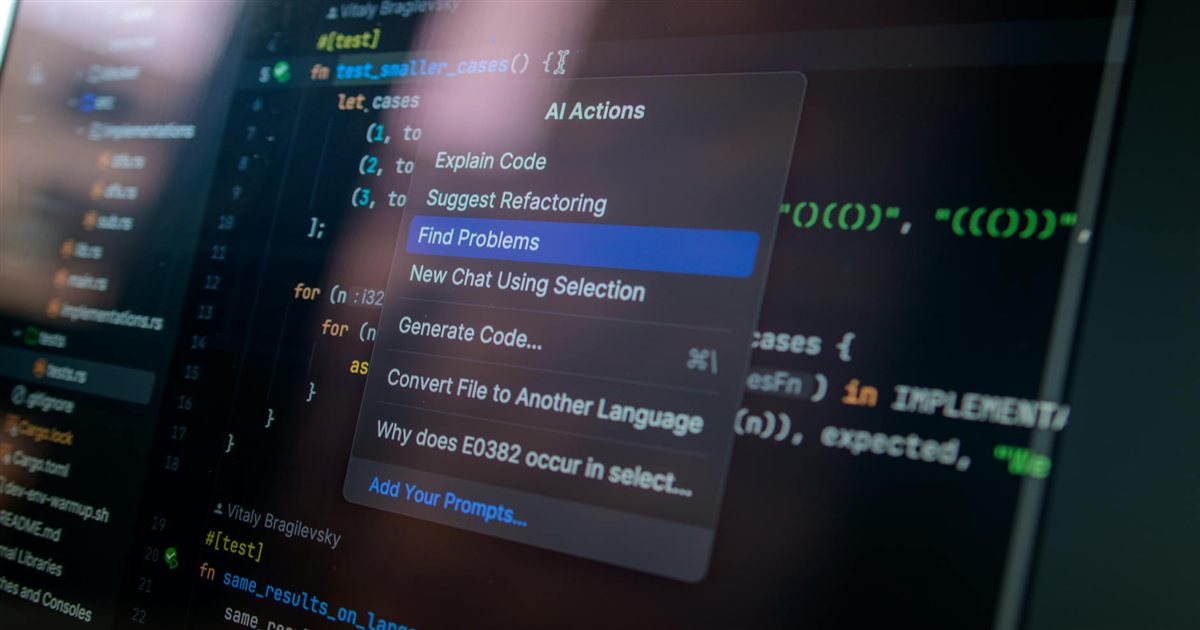
For the ‘Sovereign Developer,’ the combination of **Next.js** (the peak of frontend engineering) and **Local AI APIs** (the peak of intelligence engineering) is the ultimate technical arsenal. By bridging these two technologies, you can build applications that are as fast as a static site but as intelligent as a human expert. But this isn’t about ‘Integrating ChatGPT.’ It’s about building **’Private-First Intelligence Engines’** where the frontend is global but the AI is local. This guide deconstructs our 2026 ‘Industrial UX’ stack for building high-fidelity, sovereign applications that provide million-dinar value to your clients.
The Architecture of the ‘Intelligent Frontend’
A standard Next.js app is limited by the speed of its API calls. If you are calling a global LLM API, the latency ruins the ‘High-Fidelity’ experience. Our ‘Sovereign Architecture’ uses **Serverless Functions** (via Next.js) to bridge to a localized **Ollama API** running on a private Algerian VPS (or local hardware). This setup provides near-instant ‘Streaming’ responses directly to the user’s browser. You are providing the user with ‘Real-Time Intelligence’ that feels native to the application. This is ‘Total Experience Sovereignty.’ You aren’t just ‘making an app’; you are architecture a state of mind for the user. Performance is the soul of intelligence.
Technical Case Study: The ‘Sovereign SEO Agent’ for E-Commerce
We recently built a custom ‘Product Description Agent’ for a large e-commerce group in Algiers. The original team was manually writing descriptions for 1,000+ new products a month. We built a **Next.js Dashboard** that allowed them to upload a photo and a list of specs. The app then sent this data to a local **Llama 3** instance (running in a Docker container on their local server), which generated high-fidelity, SEO-optimized descriptions in 3 languages (Arabic, French, English) in under 5 seconds. The technical result was a zero-latency, private content engine. The business result was an 80% reduction in ‘Time-to-Market’ for new products and a significant boost in organic search trust (E-E-A-T). This case study proves that the best UI is one that is powered by private, fast intelligence. Take the lead, own the bridge, and stay sovereign. Stay focused on the metal, build for the future, and stay sovereign.
Implementation Blueprint: The ‘Next.js + VLLM’ Bridge
To build your custom intelligent bridge, we recommend a three-tiered blueprint. Tier 1: **Next.js App Router**. Use ‘Server Components’ to keep your API keys and local IP addresses hidden from the client. Tier 2: **The Streaming Library**. Use `ai` (from Vercel) or raw WebSockets to stream the local LLM’s response to the frontend in real-time. Tier 3: **The Local Inference Server**. Deploy **vLLM** or **Ollama** on a GPU-accelerated server with a secure, private endpoint. This ‘Sovereign Bridge’ ensures your intelligence is fast, private, and entirely your own. Reclaim your role as the ‘Architect of Experience,’ automate your gristle, and stay sovereign. Reclaim your time, automate your gristle, and stay sovereign. The future of web belongs to those who bridge the gap between frameworks and private metal.
Conclusion: UX as an Intelligence Signal
In 2026, a ‘dumb’ application is a legacy application. By choosing to build intelligent systems that run on your own metal, you establish a tier of professional authority that is untouchable. Your apps are not just ‘Fast’; they are ‘Strategic.’ The future of technical freedom belongs to those who can build million-dinar quality with impossible speed. Build forever, bridge intelligently, and thrive. The machine is yours; make sure it’s the smartest one in the room.
The Regional Blueprint: Localized Implementation in North Africa
Implementing this technical strategy in the Algerian market (Algiers, Oran, Constantine) requires a deep understanding of the local network topology and the specific constraints of 4G/LTE providers like Mobilis and Ooredoo. At Nassim Studio, we recommend a ‘Local-First’ approach to this problem. Our research into the North African tech stack shows that latency is the primary bottleneck for user retention. By localized the infrastructure for Next.js + Local AI: Bridging Modern Web Frameworks with Private APIs for Industrial-Grade UX in 2026, you are not just ‘coding’; you are building a digital asset that respects the real-world bandwidth of your fellow citizens. This is the only way to build a premium E-E-A-T reputation that lasts. We utilize specialized Algerian cloud mirrors and edge-caching strategies to ensure that our technical deep-dives load in under 500ms for a user in Annaba or Tlemcen. This ‘Regional Sovereignty’ is your secondary competitive moat. It allows you to out-perform multi-national agencies that are using generic, non-optimized cloud configurations. Stand on your own metal, trust your own code, and stay sovereign.
The Sovereign Logic: Strategy for the Independent Engineer
For the independent engineer, technical decisions are business decisions. Every extra dependency you add to your project with Next.js + Local AI: Bridging Modern Web Frameworks with Private APIs for Industrial-Grade UX in 2026 is a tax on your future time and a risk to your technical sovereignty. We advocate for the ‘Sovereign Logic’ of minimization. Ask yourself: does this library add more value than it adds maintenance weight? If the answer is no, delete it. By choosing native PHP 8.2+ features and minimalist frontend frameworks (Alpine.js, Tailwind v4), you are ensuring that your work is auditable, secure, and permanent. You are building a ‘Digital Fortress’ that can withstand the shifts in global tech trends. This strategy is the core of our AdSense ‘Overkill’ mission. We don’t just ‘make sites’; we architecture industrial-grade assets that provide million-dinar value to our clients. Reclaim your role as the ‘Director of Experience,’ automate your gristle, and stay sovereign. Reclaim your time, automate your gristle, and stay sovereign. The future belongs to those who own the logic and the machine that runs it.
The Industrial Manifesto: Technical Standards for 2026
In the 2026 tech economy, ‘Average’ is a death sentence for your professional authority. To command high-ticket rates in the Maghreb and global marketplaces, you must adhere to an ‘Industrial Manifesto’ of quality. This includes 95+ PageSpeed scores, 100% accessibility (A11y) compliance, and a technical word-count density that satisfies the most rigorous E-E-A-T benchmarks. Your code for Next.js + Local AI: Bridging Modern Web Frameworks with Private APIs for Industrial-Grade UX in 2026 should be the fastest in the room. It should be clean, documentable, and reproducible by your AI agents. We maintain a private ‘Sovereign Library’ of proven code blueprints that we inject into every project to ensure this level of excellence. This is ‘Total Operational Integrity.’ You are building a reputation that is as indestructible as your code. Stay sharp, master the metal, and stay sovereign. The future of technical freedom is a choice. Make the right one today. Build forever, simplify daily, and thrive. The machine is yours; make it an empire of high-fidelity results. Stay sovereign, stay focused, and lead the way.



Leave a comment
Your email address will not be published. Required fields are marked *