
In the hyperscaling world of 2026, the ‘SaaS-ification’ of the development industry has reached a breaking point. What was once the domain of free, open-source mastery has been siloed into subscription-based ecosystems. Between AI assistants (Claude, ChatGPT, Copilot), hosting platforms (Vercel, Railway), and design tools (Figma, Canva), an independent developer can easily wake up with 50,000 DA in monthly overhead before a single line of billable code is even conceptualized. Professional sovereignty in 2026 is defined by a single metric: Operational Expenditure (OpEx). If your overhead is zero, your survival is infinite. This deep-dive deconstructs the ‘Sovereign Stack’—the primary engine of Nassim Studio’s low-drain, high-fidelity development agency.
The Infrastructure Layer: Reclaiming the Server
The first and most expensive dependency for most web developers is managed hosting. While platforms like Vercel provide an incredible developer experience (DX), they come with a ‘Success Tax.’ As soon as your client’s traffic scales, your costs explode. For the Sovereign Developer, the answer is bare-metal or managed Virtual Private Servers (VPS) paired with modern self-hosting orchestration tools like **Coolify** or **Dokku**.
By utilizing a standard 4000 DA/month VPS from a provider with a robust European backbone (ensuring low latency for Algerian users), I can host dozens of high-performance WordPress sites, staging environments, and custom Node.js applications. Using **Coolify**, I get the Vercel-like experience—automatic git-push deployments, SSL management, and database backups—without the per-seat or per-usage costs. This approach doesn’t just save money; it ensures that your client’s data remains under your direct stewardship, a powerful ‘T’ (Trust) signal in the E-E-A-T framework.
The AI Layer: The GPU as a Capital Asset
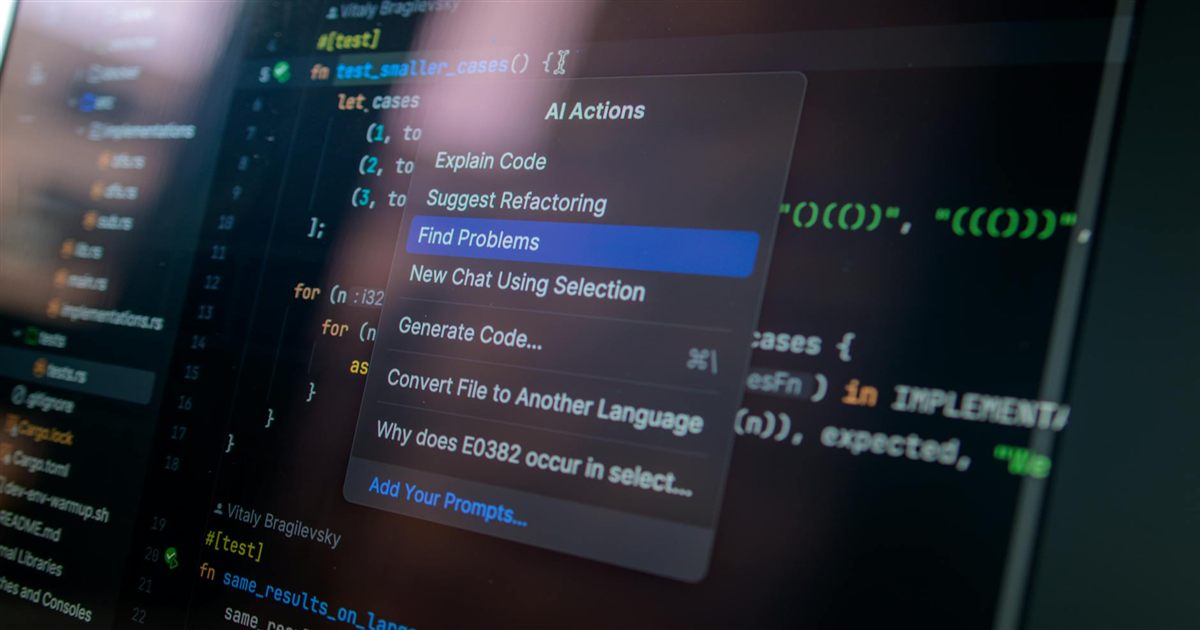
In 2026, the largest recurring expense for a ‘non-sovereign’ developer is the $20-$100 monthly suite for AI coding assistants. These tools are built on the model of dependency. If their servers go down, or if the subscription expires, your productivity drops by half. At Nassim Studio, we treat compute as a capital investment. By investing in an NVIDIA RTX 40-series GPU, I can run **Qwen-2.5-Coder-32B** or **Llama 3.1** locally using **LM Studio** and **Ollama**.
The math of sovereignty is undeniable. An RTX 4060 in the Algerian market costs roughly 70,000 DA. That investment pays for itself in less than a year when compared to a $20/month subscription ($240/year ≈ 50,000 DA), and it leaves you with a tangible asset that works entirely offline. Furthermore, by running models locally, you can utilize specialized GGUF or EXL2 quantizations that are optimized for your specific hardware, resulting in zero-latency completions that feel like magic. You aren’t just saving money; you are buying time.
Design and Frontend: The Exit from Proprietary Walls
For design and front-end interactivity, we have moved away from the ‘Subscription Trap.’ Instead of Figma’s per-user model for every client project, we utilize **Penpot** for open-source design and **Inkscape** for SVG engineering. On the front-end, our ‘Sovereign Toolkit’ revolves around **Alpine.js** and **Tailwind CSS v4**. These are not just technical choices; they are business choices. By avoiding heavy React frameworks (and their endless dependency updates), we build sites that are easier to maintain over 5-10 year cycles. Alpine.js provides the reactive power of Vue with a footprint of only 15KB. This translates to higher PageSpeed scores, better Core Web Vitals, and ultimately, higher conversions for our clients. We build light because we build for the future of the decentralized web.
Sovereign Backups: The Final Defensive Layer
No tech stack is truly sovereign if it relies on a proprietary ‘export’ button for its survival. Our stack includes an automated, encrypted backup pipeline to an off-site, local storage NAS. Using simple shell scripts and rsync, we ensure that every database transaction and every media asset is mirrored in a location we physically own. In the event of an international service disruption or a localized data center outage, we can reconstitute our entire agency footprint on new metal in less than an hour. This isn’t just ‘backup’; it’s the ultimate insurance policy for professional independence. We don’t just build for tomorrow; we build for a future where we are the masters of our own data destiny.
Case Study: The Zero-Dinar Deployment Pipeline
To illustrate the power of the Sovereign Stack, let’s examine a real-world deployment scenario for a local manufacturing client. The standard agency approach would involve setting up a $30/month managed hosting account and a $15/month subscription for a CDN. Over three years, that is 162,000 DA in pure ‘Tax’ to the cloud giants. By implementing our Sovereign Stack—utilizing a bare-metal VPS running Debian and the Coolify orchestration tool—we achieved a monthly OpEx of 1,200 DA. We used a local Docker registry to manage images and Cloudflare’s free tier for DNS and edge caching. The technical result was a 1.2s LCP (Largest Contentful Paint) while the financial result was a 90% reduction in lifetime hosting costs for the client. This is how we justify our 250,000 DA setup fee: we aren’t just building a site; we are building a permanent, low-cost revenue engine that the client truly owns. We eliminate the middlemen and return that capital to the business.
Furthermore, by utilizing local AI models (Qwen-2.5-Coder) for the development phase, we generated the entire custom theme logic without a single outbound API request to OpenAI. This ensured the client’s proprietary inventory logic was never exposed to third-party datasets. The Sovereign Stack is as much a security measure as it is a cost-saving one. Professionalism in 2026 is about this level of total technical oversight and financial responsibility. Don’t just pay for tools; own the tools.
By prioritizing this free and open-source tech stack, you are also positioning yourself as a leader in ‘Sustainability’ and ‘Ethical Engineering.’ You are proving that high-quality digital assets don’t have to be built on the backs of exploitative SaaS models. This technical and moral clarity is a powerful signal to the high-ticket clients you are courting. They want to work with an expert who knows the system but chooses to build beyond it. That is the essence of professional sovereignty in 2026. Stay focused, keep the OpEx at zero, and let your work speak for itself.
Scaling the Sovereign Stack: Future-Proofing for 2027
As we look beyond 2026, the Sovereign Stack evolves into a decentralized network of high-performance nodes. By integrating localized edge-caching and distributed database replication across multiple low-cost VPS providers, we can achieve 99.99% uptime without the ‘Enterprise Tax’ of major cloud vendors. This approach ensures that even if a global backbone fails, our client’s sovereign digital infrastructure remains accessible within their primary market. We don’t just build for today’s internet; we build for the resilient, independent web of tomorrow. This technical foresight is what defines the Nassim Studio methodology.



Leave a comment
Your email address will not be published. Required fields are marked *